
5 Professional Use Cases Where Speech-to-Text Saves Hours Every Week
Speech-to-text technology has crossed a threshold. It's no longer a novelty or a productivity experiment — it's a core workflow tool for specific professions where the alternative (manual transcription or expensive services) carries real costs in time and money.
Here are five professional contexts where speech-to-text delivers measurable ROI, and what each group actually needs from a transcription tool.
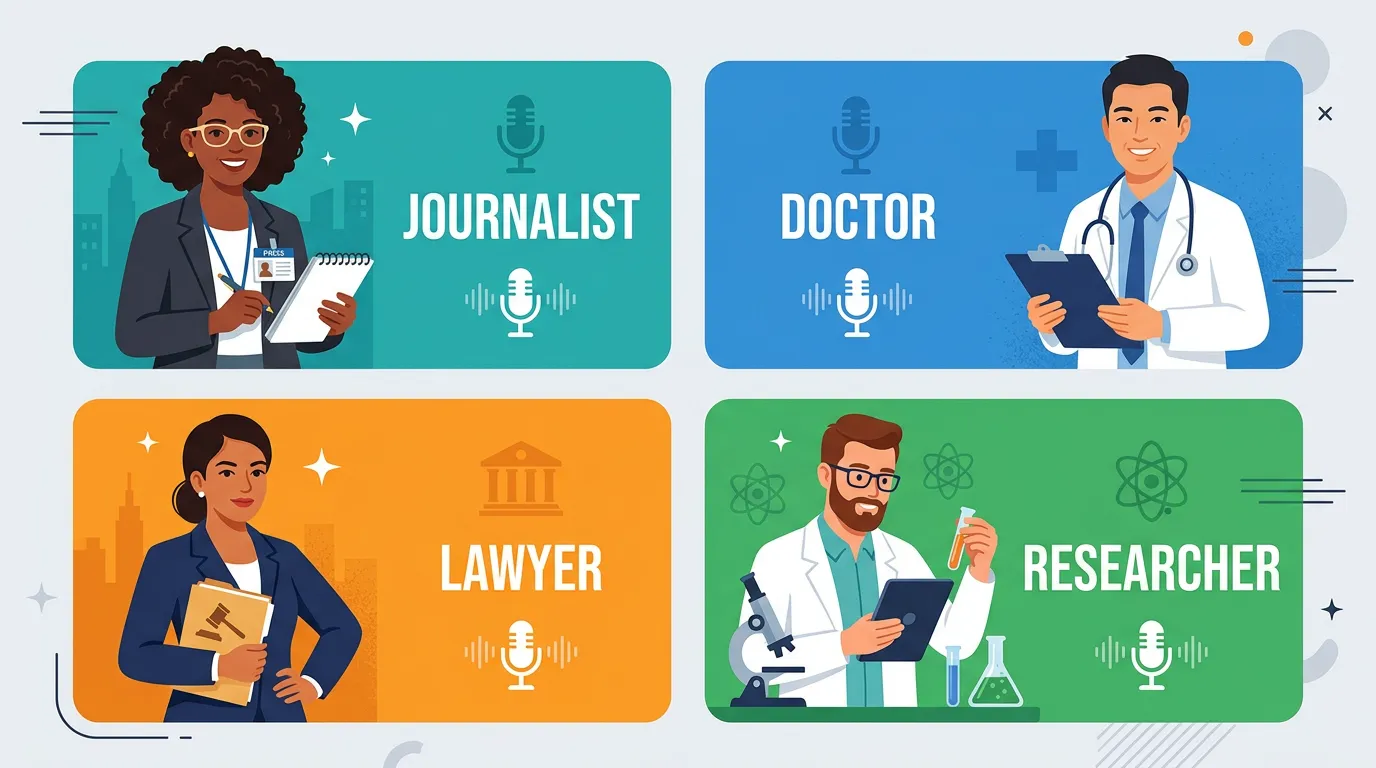
1. Journalism: Interview Transcription

For journalists, transcription has always been a tax on their time. A 45-minute interview can take 2–3 hours to transcribe manually. At scale — multiple stories a week, multiple interviews per story — this becomes a significant drag on output.
What journalists need:
- Accuracy on names and places: Proper nouns are where generic models struggle, but Whisper handles most names accurately in context
- Timestamps: Being able to find the exact moment a source said something is essential for quote verification and audio editing
- Privacy: Sources may not consent to having their audio uploaded to cloud services; local processing eliminates this concern
- SRT/VTT output: For multimedia producers who embed audio or video alongside articles
Real workflow: Record interview on phone or recorder → export audio → upload to Whisper Web → get timestamped transcript → pull direct quotes with their timestamps for fact-checking.
Time saved: A typical journalist reports saving 1.5–2 hours per interview, or 8–10 hours per week for those doing multiple interviews.
2. Legal: Deposition and Consultation Notes
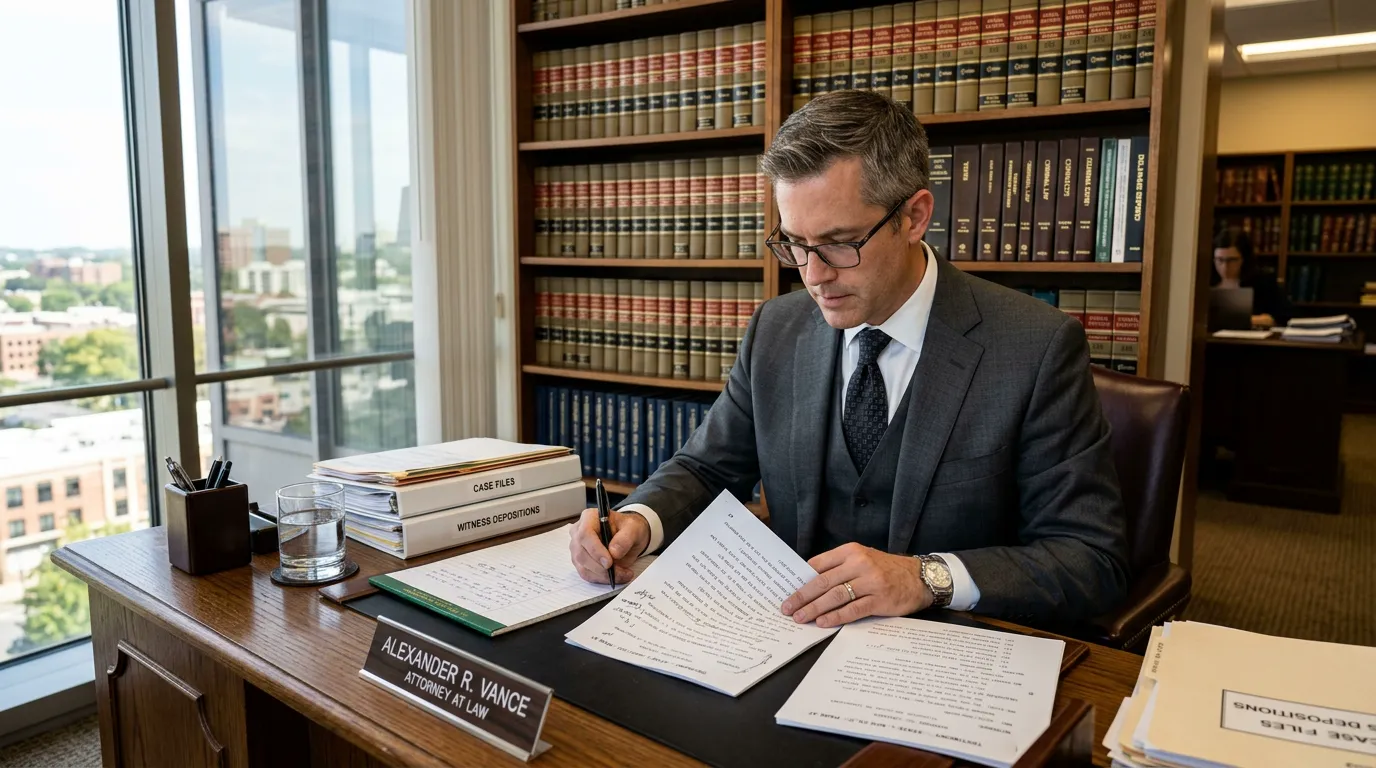
The legal profession generates enormous amounts of spoken content that needs to be documented: client consultations, depositions, witness interviews, court hearings, and internal case discussions.
Traditional legal transcription services charge $1.50–$4.00 per minute of audio — a 2-hour deposition can cost $200–$500 to transcribe professionally. Many firms pass this cost to clients; others absorb it.
What legal professionals need:
- Confidentiality: Attorney-client privilege means audio cannot be sent to third-party servers without careful consideration. Local processing is the simplest compliance path.
- High accuracy: Legal documents require precision; a misheard word can alter meaning significantly
- Speaker separation: Multiple speakers are common in depositions (though automated diarization remains imperfect)
- Exportable text: Clean text output that can be copied into case management software
Privacy consideration: Using a local processing tool like Whisper Web for legal audio means the audio never leaves the firm's device — a meaningful distinction when client confidentiality is at stake.
Cost comparison: For a firm processing 20 hours of deposition audio monthly, the difference between professional transcription services (~$2,400/month) and a free local tool is substantial.
3. Academic Research: Qualitative Interview Analysis

Qualitative researchers — sociologists, anthropologists, psychologists, public health researchers — conduct extensive interviews as primary data. Transcribing this data is essential for analysis but extremely time-consuming.
A typical qualitative dissertation might involve 20–30 hours of interview audio. Manual transcription at a moderate pace (typing approximately 1:3 real-time) would require 60–90 hours of transcription work before analysis even begins.
What researchers need:
- Multi-language accuracy: Research often involves non-English speaking participants; Whisper's 97-language support is a significant advantage
- Verbatim accuracy: Unlike journalism, qualitative research often requires capturing hesitations, false starts, and speech patterns
- Data privacy: IRB protocols often restrict sharing participant audio; local processing addresses this requirement
- Bulk processing: Researchers need to transcribe many interviews, often in batches
IRB compliance note: Many Institutional Review Board protocols require explicit participant consent before sharing audio with third parties. Local processing with Whisper Web sidesteps this requirement entirely since no data leaves the researcher's machine.
Time saved: Researchers consistently report that AI transcription reduces their transcription time by 70–80%, with the remainder spent on review and cleanup.
4. Healthcare: Medical Dictation and Documentation

Clinical documentation is one of the largest time burdens on physicians. Studies suggest doctors spend 1.5–2 hours per day on documentation — time taken away from patient care. Speech-to-text for clinical notes (medical dictation) directly addresses this problem.
Specialized medical transcription software exists (Dragon Medical, Nuance) but costs hundreds of dollars per user per month. For individual practitioners, small practices, and researchers in clinical settings, general-purpose AI transcription is a viable alternative for many documentation tasks.
What healthcare professionals need:
- HIPAA considerations: Patient health information (PHI) is strictly regulated. Cloud-based transcription creates data governance questions. Local processing with Whisper Web means PHI never leaves the device.
- Medical terminology accuracy: Whisper handles common medical terms well in context; specialized terminology occasionally needs correction
- Fast turnaround: Physicians dictating after patient visits need transcripts quickly
- Clean text output: Most clinical documentation workflows end with pasting into an EHR system
Important note: Whisper Web is a general transcription tool, not a certified medical device. For clinical documentation workflows, verify compatibility with your institution's compliance requirements. However, for research, administrative, and educational healthcare contexts, it's a practical tool.
Typical use: Dictate clinical summary after each patient visit → transcribe in batch at end of day → review and paste into EHR.
5. Content Creation: Video Production and Repurposing
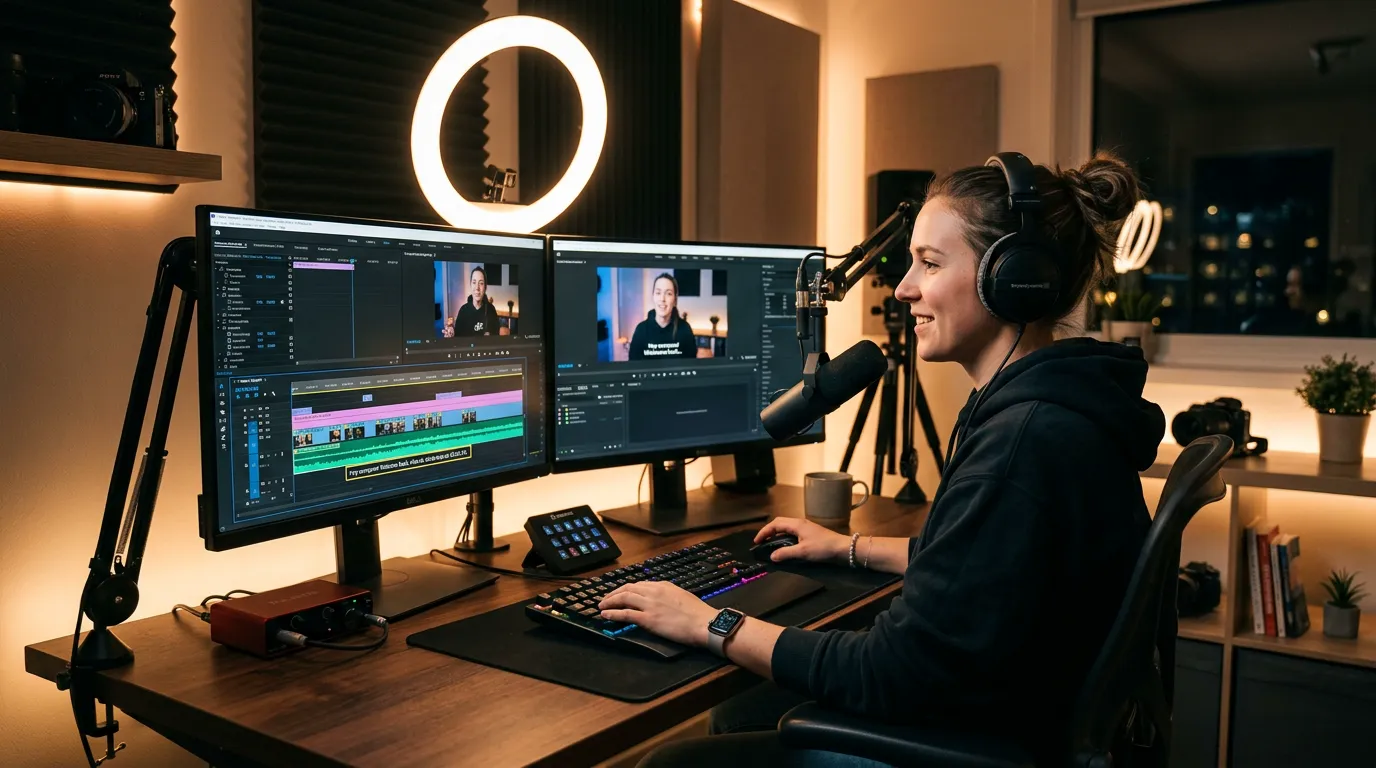
The content creation economy has made video transcription a standard production step. YouTubers, podcasters, online educators, and social media creators all benefit from having accurate transcripts of their content.
The use cases within content creation are diverse:
Subtitle generation: Upload the SRT file to YouTube, Vimeo, or social platforms for accessibility and SEO.
Script-to-content conversion: Transcribe a recorded video or podcast episode, then use the transcript as the basis for a blog post, newsletter, or Twitter thread.
Video editing assistance: Transcripts with timestamps make it much easier to find and cut specific moments in long recordings.
Searchable video library: Build a personal archive where you can search across all your past content by keyword.
Course creation: Transcripts of video lessons become study guides, downloadable resources, and accessibility accommodations for students.
What creators need:
- SRT and VTT export: Direct upload to platforms
- Timestamped segments: For editing reference
- Speed: High-volume creators may process many hours of content weekly
- No cost at scale: Cloud API costs add up quickly for creators processing 50+ hours per month
Realistic throughput: A creator uploading 3–4 videos per week (average 15 minutes each) can transcribe an entire week's content in under 30 minutes using Whisper Web.
Common Threads Across Use Cases
Looking at these five professional contexts, certain requirements appear repeatedly:
Privacy and data control matters in every professional context. Journalism protects sources. Legal protects clients. Research protects participants. Healthcare protects patients. Content creation involves proprietary work. In each case, local processing eliminates an entire category of risk.
Cost at scale is a consistent driver. Professional transcription services and cloud APIs both become expensive as volume grows. A free tool with no usage limits changes the math entirely.
Accuracy on domain-specific content varies by profession. Legal and medical users have the highest accuracy requirements and benefit most from reviewing and correcting output. Journalists and content creators typically find AI transcription output immediately usable with minimal editing.
Export flexibility matters more than most tools acknowledge. The ability to get SRT, VTT, JSON, or plain text — and choose which format fits the downstream workflow — is a practical differentiator.
Getting Started
If you recognize your workflow in any of the use cases above, Whisper Web is worth testing with a real sample from your work. The free, no-account model means you can evaluate accuracy on your specific content in minutes.