
Whisper vs Cloud Speech Recognition: A Practical Comparison
Choosing a speech-to-text solution in 2025 means navigating a crowded field. Cloud providers offer convenience and enterprise features. Open-source models like Whisper offer accuracy and privacy. Which approach is right for your workflow?
This comparison cuts through the marketing to give you a clear picture of real-world performance across the tools developers and professionals actually use.
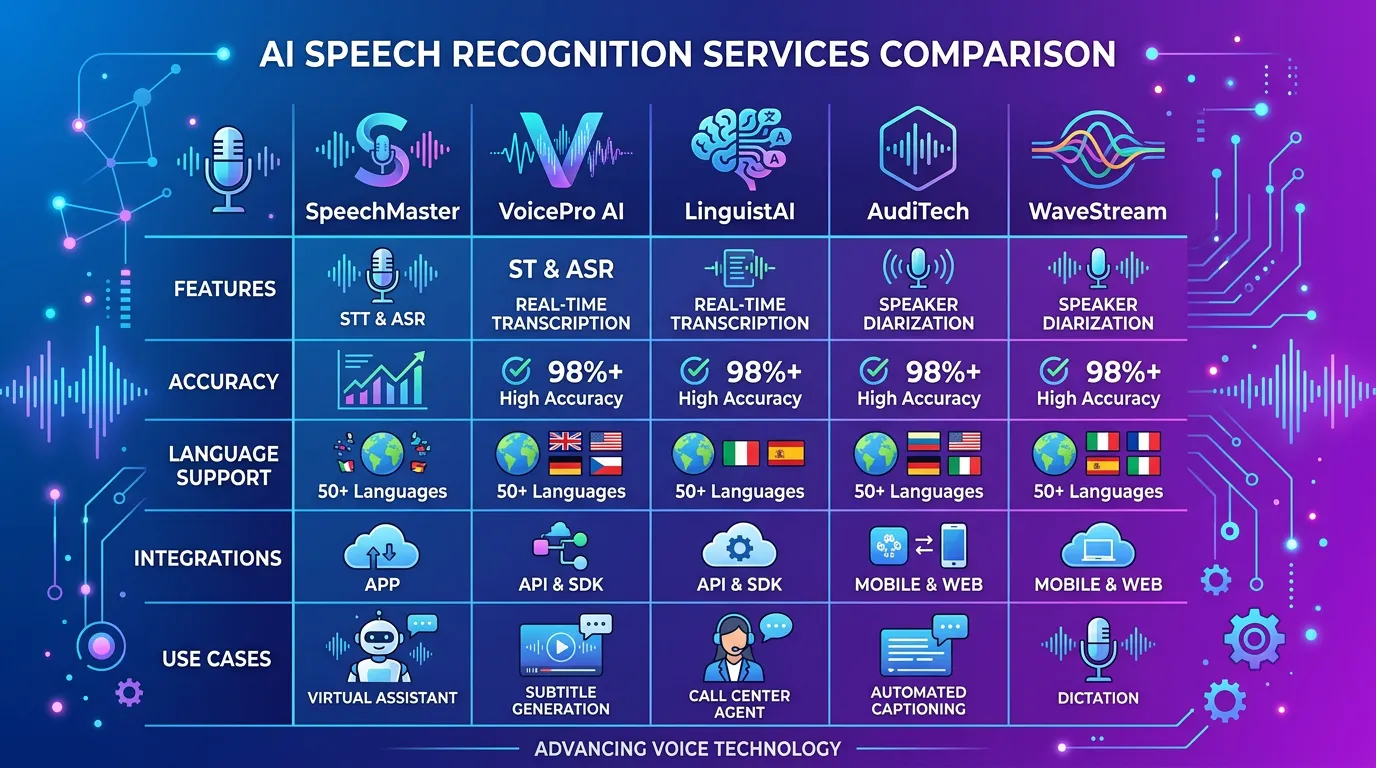
The Contenders
- Whisper (via Whisper Web): OpenAI's open-source model, running locally in your browser
- Google Cloud Speech-to-Text: Google's production API, used by many enterprise applications
- AWS Transcribe: Amazon's speech recognition service, tightly integrated with the AWS ecosystem
- AssemblyAI: Developer-focused API with additional features like speaker diarization and sentiment analysis
- Deepgram: High-speed, low-latency API popular for real-time streaming applications
Accuracy
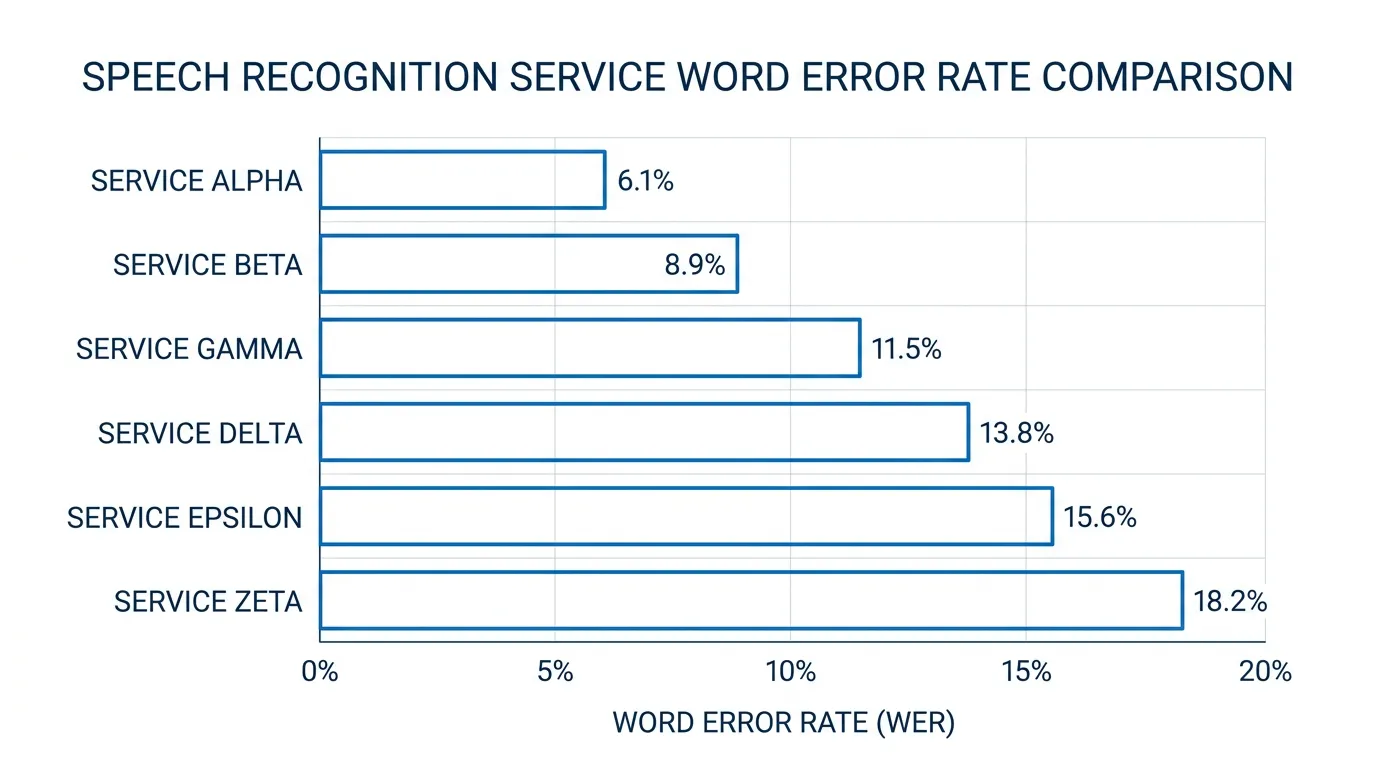
Accuracy is typically measured as Word Error Rate (WER) — the percentage of words that are incorrect in the output. Lower is better.
On the widely-used LibriSpeech benchmark (clean English audio):
| Service | WER (Clean) | WER (Noisy) | Multilingual |
|---|---|---|---|
| Whisper Large-v3 | ~2.7% | ~6.1% | 97 languages |
| Google STT v2 | ~3.4% | ~7.8% | 125 languages |
| AWS Transcribe | ~4.1% | ~9.2% | 38 languages |
| AssemblyAI | ~3.1% | ~7.4% | English-focused |
| Deepgram Nova-2 | ~2.8% | ~6.8% | 36 languages |
Key takeaway: Whisper and Deepgram are neck-and-neck for accuracy on clean audio. Whisper's advantage grows with multilingual content and noisy recordings.
Language Support
This is where Whisper stands apart. While Google leads on sheer language count (125), Whisper's performance on low-resource languages is often superior. If you're transcribing content in Vietnamese, Swahili, or Welsh, Whisper outperforms most cloud services.
Privacy and Data Security
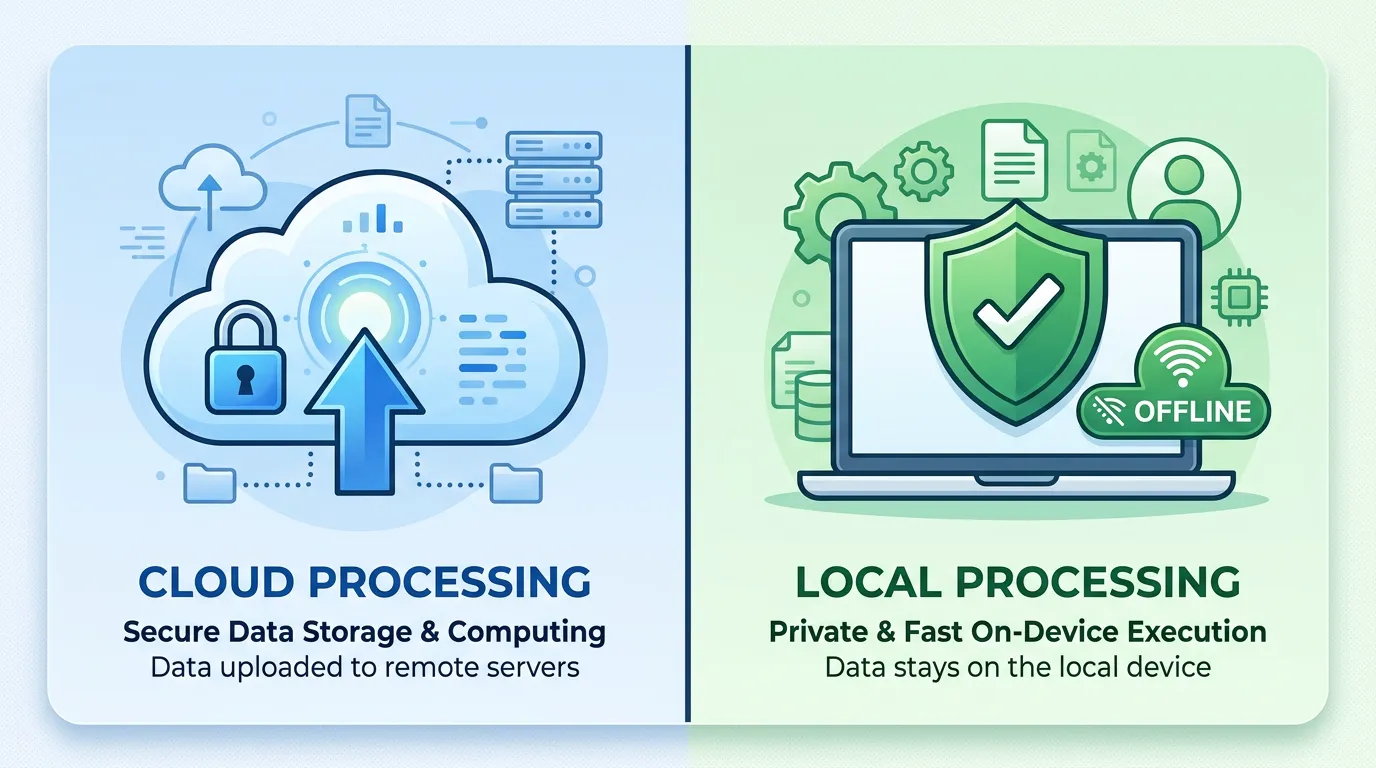
This is the most significant practical difference between the approaches:
Whisper Web (local processing)
- Audio never leaves your device
- No data stored on any server
- No API keys, no account required
- Compliant with strict privacy requirements by default (HIPAA, GDPR contexts)
Cloud services
- Audio is transmitted to and processed on external servers
- Most providers retain audio for varying periods (Google: 24 hours to unlimited depending on settings)
- Require terms of service acceptance covering data usage
- Enterprise plans often offer data processing agreements (DPAs) with stronger guarantees
For medical dictation, legal recordings, journalism sources, and confidential business conversations, local processing with Whisper Web eliminates the compliance overhead entirely.
Cost
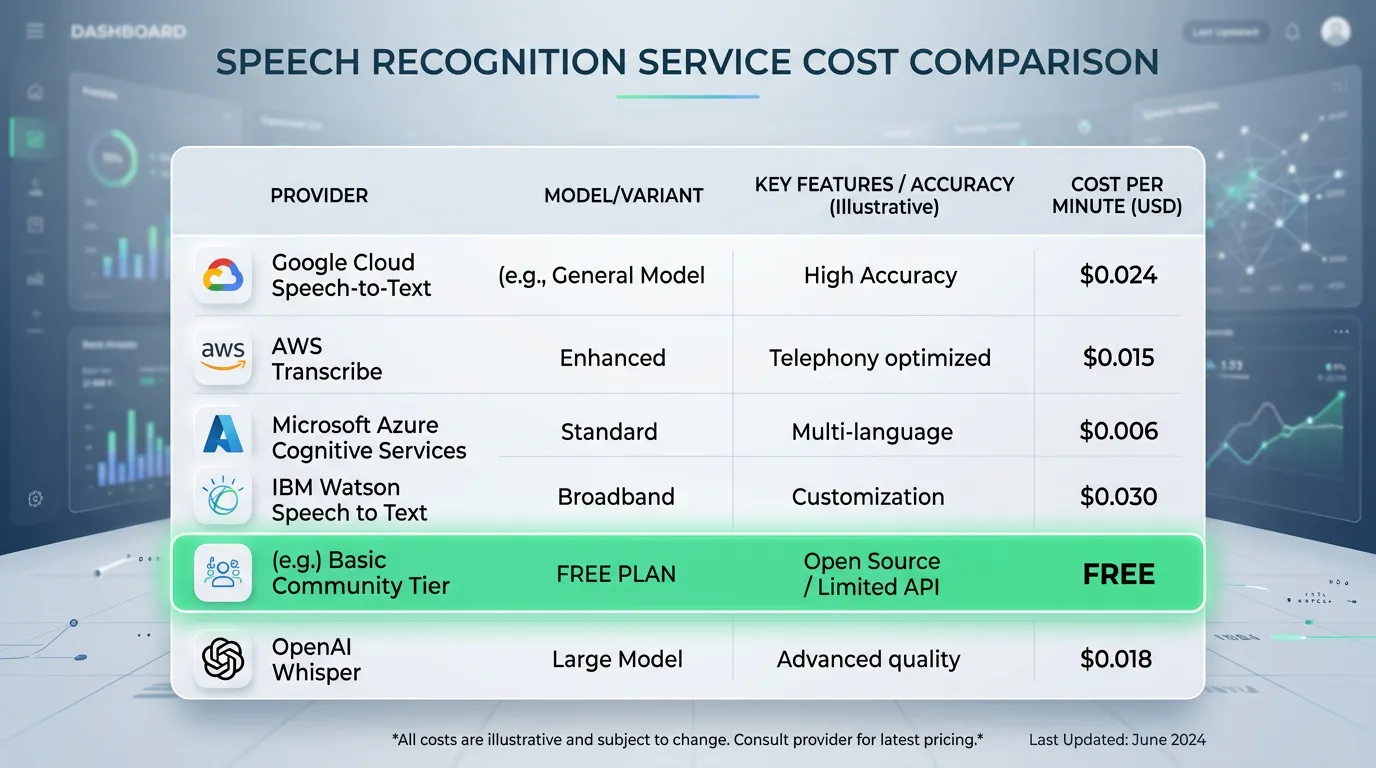
Cloud services bill per minute of audio:
| Service | Cost per Minute | Free Tier |
|---|---|---|
| Whisper Web | $0 (free forever) | Unlimited |
| Google STT | $0.006–$0.016 | 60 min/month |
| AWS Transcribe | $0.024 | 60 min/month (first year) |
| AssemblyAI | $0.0065–$0.015 | $50 credit |
| Deepgram | $0.0043–$0.0125 | $200 credit |
For a content creator transcribing 20 hours of video per month:
- Whisper Web: $0
- Google STT: ~$7–$19/month
- AssemblyAI: ~$8–$18/month
- AWS Transcribe: ~$29/month
For a podcast network processing 500 hours monthly, the difference becomes significant.
Speed and Latency
Cloud APIs have a built-in advantage for real-time streaming — they're running on server-grade GPUs. For batch processing (uploading a finished file), the comparison is more nuanced.
Real-time streaming:
- Cloud APIs: 200–500ms latency for live transcription
- Whisper Web (WebGPU): Not designed for true real-time streaming; better suited for post-recording transcription
Batch processing (10-minute audio file):
- Whisper Web with WebGPU: 2–4 minutes
- Whisper Web with CPU only: 5–12 minutes
- Cloud APIs: 30 seconds–3 minutes (server processing)
If your use case requires live captions during a broadcast, cloud APIs are the right choice. If you're transcribing recordings after the fact, Whisper Web is competitive.
Features Comparison
| Feature | Whisper Web | Google STT | AssemblyAI | Deepgram |
|---|---|---|---|---|
| Speaker diarization | No | Yes | Yes | Yes |
| Auto punctuation | Yes | Yes | Yes | Yes |
| Custom vocabulary | No | Yes | Yes | Yes |
| Sentiment analysis | No | No | Yes | No |
| SRT/VTT export | Yes | No (raw text) | Yes | Yes |
| Offline use | Yes | No | No | No |
| No account needed | Yes | No | No | No |
When to Use Each
Choose Whisper Web when:
- Privacy is non-negotiable (medical, legal, journalistic)
- You need a zero-cost solution with no usage limits
- You're transcribing content in less common languages
- You want SRT/VTT subtitle output without extra steps
- You're an individual or small team without API infrastructure
Choose a cloud API when:
- You need real-time live streaming transcription
- Speaker identification is required in your workflow
- You're integrating transcription into a production application
- You need custom vocabulary for specific domain terminology
- Processing speed on large volumes is the priority
The Bottom Line
Whisper is the most accurate freely available speech recognition model, and Whisper Web makes it accessible without any infrastructure setup. For the vast majority of individuals and teams who transcribe audio in batches — podcasters, journalists, researchers, content creators — it's the better choice on accuracy, privacy, and cost.
Cloud services earn their place in production pipelines that require real-time capabilities, speaker separation, or tight integration with existing cloud infrastructure.
The good news: you can try Whisper Web right now, for free, and compare the results on your own audio.